How to Track Expenses for Small Business
You already know you’re supposed to be tracking business expenses. The part nobody explains clearly is what that actually means, day to day.
Here’s the direct answer: tracking expenses means recording every business purchase against a category, on the day it happens, kept separate from your personal spending. That’s it. Everything else (apps, spreadsheets, receipt photos) is tooling around that one habit.
Get the habit right and the tool barely matters. Get it wrong and no tool will save you.
The actual method
Five habits do almost all of the work. None of them require software.
1. Separate business and personal spending first. One card or account for business, everything else for personal. This alone removes most of the manual sorting later. You’re not digging through a personal statement asking “was this a client lunch, or just lunch?”
2. Pick categories aligned to tax deductions, not vibes. Software, travel, equipment, professional fees: categories that map to what a tax return actually asks for. A generic “Misc” bucket is where money quietly stops being deductible, because nobody can explain what’s in it by year end.
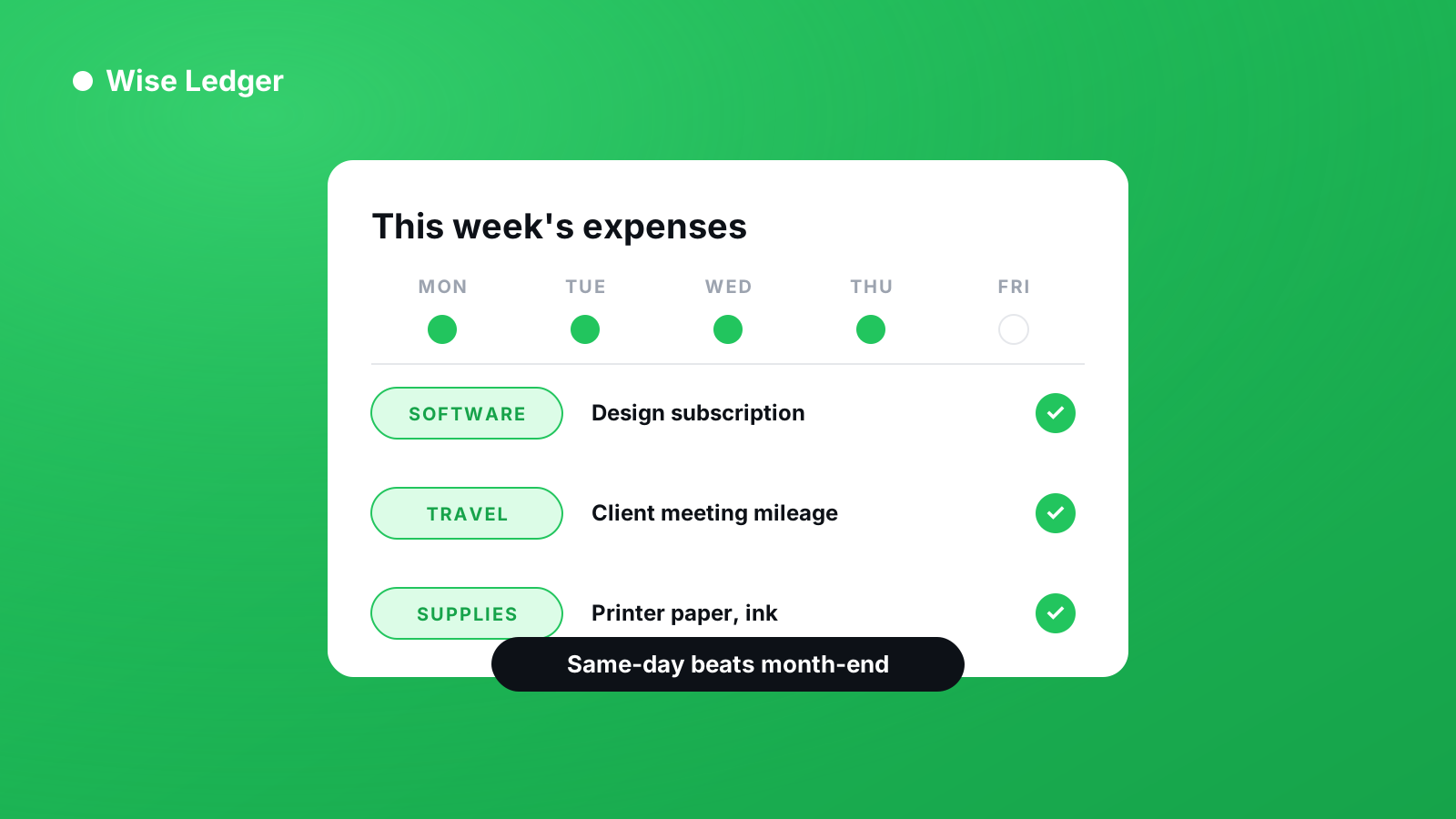
3. Log it the same day, not at month end. This is the one habit that decides whether the whole system survives. On the day of purchase you remember what it was for. Three weeks later you’re guessing, and guessing is how deductions get missed or invented.
4. Keep the receipt — a photo is enough. You don’t need the paper. A photo taken at the point of purchase, attached to the entry, is sufficient for most tax authorities and removes the shoebox entirely.
5. Reconcile weekly. Once a week, check what you’ve logged against your bank or card statement. Ten minutes, same day each week. This is what catches the purchase you forgot to log — not an annual scramble.
Why most people fail at this
None of the five habits above are hard individually. What’s hard is doing all five for long enough that they become automatic. A few patterns explain almost every failure.
The spreadsheet gets abandoned by week three. It works beautifully for the first ten entries, made in one sitting, feeling organised. Then a busy week happens, three receipts pile up, and re-opening the file to backfill them feels like a chore instead of a habit. By week three the file hasn’t been opened in eleven days, and starting again feels worse than never having started.
Receipts go into a shoebox, or a photo folder, and never come back out. Capturing the receipt feels like progress, so it’s easy to mistake for tracking the expense. But two hundred unlabelled photos in December answer no question. Capture without categorising isn’t tracking. It’s deferring the work to a worse version of yourself.
There’s no set time for it. “I’ll do it when I have a minute” means it competes with everything else in a day, and it always loses, because nothing forces the minute to happen. The people who keep this up long-term almost always have a fixed slot (Sunday evening, first thing Monday), not a vague intention.
Tools people actually use
Once the habit is in place, here’s a fair look at what holds it.
A plain spreadsheet. Free, flexible, and genuinely sufficient if you have a handful of transactions a month. It fails the moment you need to search, total by category quickly, or hand it to someone else.
A personal finance app. Good at showing where your own money went. It categorises for lifestyle, not tax, and has no concept of “business” versus “personal” — everything lands in one wallet. We’ve written about exactly where that breaks: why a personal finance app can’t run a business.
A dedicated expense tracker. Built specifically for capturing and categorising purchases, usually with receipt scanning and tax-shaped categories out of the box. This is the right size of tool for most one-person businesses: enough structure to be useful, not so much that you’re navigating past features you’ll never touch.
Full accounting software. Expense tracking is one small piece of a much larger system that also handles invoicing, payroll, and reporting. Worth it if you need the rest of what it does. Overkill if expenses are the only problem you’re solving.
Where Wise Ledger fits
Wise Ledger is built around the two habits people actually drop: logging same-day, and keeping the receipt.
Scan a receipt and it becomes a categorised expense in one step. The photo and the record happen together, so there’s no separate step to skip later. Categories are pre-built around what a tax return actually asks for, so “which bucket does this go in” isn’t a decision you’re inventing from scratch every time.
It won’t do payroll or run your business banking. It exists to make the one habit that decides everything — same-day logging — take ten seconds instead of feeling like homework.
Frequently asked questions
Do I need to keep paper receipts, or is a photo enough? A photo is enough for most tax authorities, provided it’s legible and taken close to the time of purchase. Check your specific local requirement if you’re audited often or dealing with large expenses, but for the vast majority of small business purchases, a photo attached to the expense record is standard practice.
How often should I actually log expenses? The same day the purchase happens, or as close to it as possible. Weekly is the outer limit before accuracy starts to drop. Beyond that you’re reconstructing from memory rather than recording, and reconstructed numbers are where deductions get missed.
What categories should I use for expenses? Categories that map to what your tax return actually asks for: equipment, software and subscriptions, travel, professional fees, supplies. Avoid a catch-all “Miscellaneous” category; if you can’t name what’s in it, it’s not doing its job.
Can I track expenses without an app? Yes. A notebook or spreadsheet with the same five habits (separate accounts, tax-aligned categories, same-day logging, receipt kept, weekly reconciliation) works. The habit does the work; software just removes friction from keeping it up.
Tracking expenses well isn’t about finding the perfect app. It’s the habit from the top of this piece, done consistently — same-day, separated, categorised, receipt kept. Get that right and tax time stops being a scramble. It’s just a formality.
See what you've really made — and what you're still owed.